



GARAGE DOOR CABLE REPLACEMENT

- BROKEN GARAGE DOOR CABLE REPAIR
- Fast Response for Snapped Cables
- New Aircraft-Grade Lift Cables
- Always Replaced in Matched Pairs
- Full Safety Check Included
- CABLE OFF THE DRUM REPAIR
- Re-Seat or Replace Slipped Cables
- Fix Crooked and Jammed Doors
- Drum and Spring Inspection
- Door Re-Balanced Before We Leave
- Same-Day Service Available
- COMMERCIAL ROLL-UP DOOR CABLES
- Heavy-Duty Commercial Cables
- Rated for High-Cycle Daily Use
- Scheduled Around Your Hours
- Minimal Downtime for Your Business
BROKEN GARAGE DOOR CABLE REPAIR
Lift cables are the quiet workhorses of your garage door. They're braided steel lines, one on each side of the door, that connect the bottom brackets to the counterbalance system up top. Every time the door moves, those two thin cables carry the full weight of it.
On a torsion spring door, the springs sit on a shaft above the opening and store energy by twisting. As the shaft turns, grooved cable drums at each end wind the cables up and lift the door. On an extension spring door, the cables run through pulleys and stretch the springs along the horizontal tracks instead. Different geometry, same job: the cables transfer spring tension to the door so a 150 to 250 lb slab feels almost weightless.
Because both cables share the load, they have to match. Same length, same diameter, same wear. When one side stretches, frays, or lets go, the whole system falls out of balance in an instant. And that's when doors go crooked, jump the tracks, or slam down hard.
Cables also have a rated lifespan, just like springs. A standard 7x19 braided lift cable is built for roughly 10,000 open-close cycles under normal load, which works out to seven to ten years for the average household. Heavy doors, daily use, and moisture all shorten that number. If your door is pushing a decade on its original cables, they're due for a look even if nothing has snapped yet. A ten-minute inspection now beats a stuck car and an emergency call later.
SNAPPED CABLE REPLACEMENT
A failing cable usually gives you warnings. Look for frayed strands near the bottom bracket, a cable hanging loose or wound off the drum, a door that sits crooked in the opening, one side sagging lower than the other, or a door that jams partway up the tracks. A snapped cable is louder. Most homeowners describe a single loud bang from the garage, and afterward the door won't move, or moves lopsided and grinds against the track.
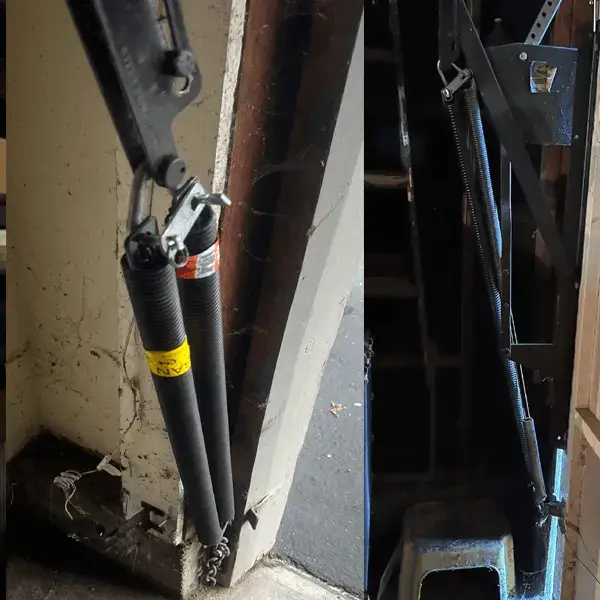
Sometimes the cable itself is fine and it has simply jumped off the drum. That happens when the door hits an obstruction on the way down, when a spring loses tension, or when the opener keeps pushing after the door has bottomed out. The slack cable unwinds, wraps around the shaft or drops off the drum, and the door cocks sideways in the opening. It looks minor. It isn't. A door that's off its cables is hanging on hardware that was never meant to carry it alone.
Here's why all of this matters. Beyond carrying the door, the cables also hold back the springs. A torsion spring on a typical double door stores enough energy to lift a couple hundred pounds seven feet in the air, and the cables keep that force in check. When one lets go, the remaining cable and the springs take the full load unevenly. The door can drop without warning, twist out of its tracks, or shift while someone's standing under it.
So please don't DIY this one. Replacing a cable means unloading and reloading spring tension, and getting that wrong sends hardware flying. Every year people are seriously hurt trying to swap cables with the springs still wound. YouTube makes it look easy right up until the moment it isn't. Our technicians do this daily with winding bars, clamps, and the right replacement parts. Call 510-458-2048 and keep everyone away from the door until we arrive.
CABLE OFF THE DRUM REPAIR
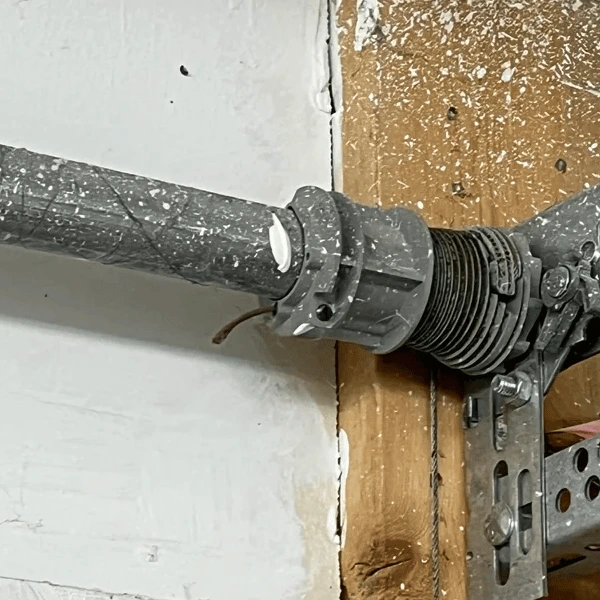
Our process is simple and thorough. First we secure the door with clamps so it can't move while we work. Then we release the spring tension safely and inspect the whole counterbalance system, because a broken cable is often a symptom, not the root cause. We check the springs for fatigue and rust, the drums for worn or sharp grooves that chew through new cables, and the bottom brackets where cables most often fray.
We always replace cables in pairs. If one cable snapped, its twin has lived the exact same life: same cycles, same load, same corrosion. Put a fresh cable next to a tired one and the old side fails within months, usually at the worst possible time. Matched new cables cost little more and keep the door balanced evenly.
Cables and springs wear on the same clock, which is why they're often replaced together. Every cycle that stretches the cables also flexes the springs, so a door that's chewed through its cables has usually used up most of its spring life too. And the failure runs both directions: a spring that's lost tension lets the cables go slack and jump the drums, while a fraying cable puts uneven twist on the shaft and stresses the springs. Fixing one without checking the other is how you end up paying for two service calls in the same season. If your springs are near the end of their cycle life, we'll tell you straight and quote both jobs at once. You can read more on our garage door spring replacement page.
On price: cable replacement typically runs $150 to $350 per pair, depending on door size, cable gauge, and how accessible the drums are. When it's bundled with spring work, the combined price is lower than doing the two jobs separately. Either way you get a firm on-site quote before any work starts, and the job ends with a full safety check: balance test, opener force test, and track alignment.
COMMERCIAL ROLL-UP DOOR CABLES
Bay Area doors have a local enemy: salt air. Homes near the bay and along the coast see moist, salty air settle on steel cables every night, and corrosion works from the inside of the braid outward. A cable can look fine on the surface while half its inner strands are rusted through. If your garage faces the water, or you can see rust blooms on your springs and brackets, have the cables inspected yearly. We install galvanized and stainless-rated cables that stand up to coastal conditions far longer than bare steel.
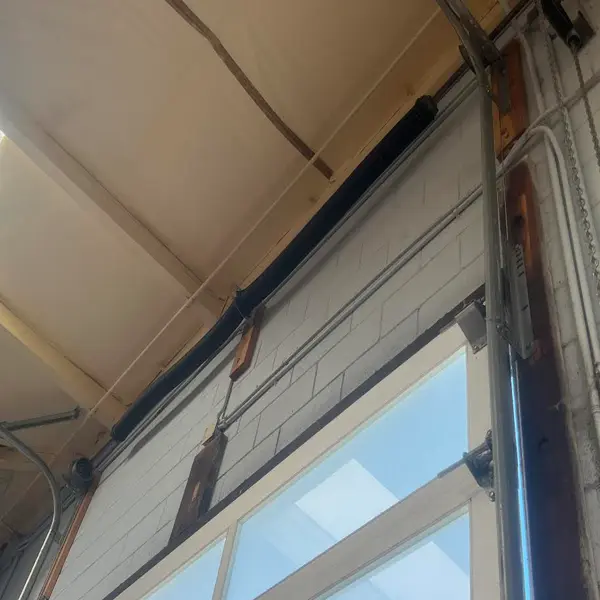
Commercial roll-up and sectional doors are a different animal. They're heavier, they cycle dozens of times a day, and a dead door can block your loading dock or trap your fleet inside. We stock heavy-gauge commercial lift cables, replace them in pairs just like residential, and schedule around your business hours so a cable swap doesn't cost you a workday.
Want to make new cables last? Keep the tracks clear so the door never lands on a bike tire or a garbage can, and never let the opener force a jammed door. Once or twice a year, look over the bottom brackets with a flashlight for rust or loose strands, but don't touch or unbolt them. The bottom brackets are under direct spring tension, and they're the one part of the door homeowners should never remove. If you spot fraying, book an inspection while the door still works. Replacing a worn cable on schedule is a quick, cheap visit. Replacing a snapped one with the door wedged crooked in the tracks takes longer and costs more.
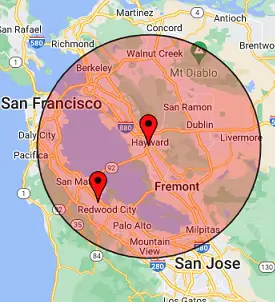
911 Garage Doors is headquartered in Hayward and serves the whole Bay Area: the East Bay including Hayward, Castro Valley, San Leandro, Fremont, Union City, and Newark, plus the Peninsula from Burlingame down to Palo Alto. We're licensed (CSLB #1098597), and our customers have kept us at 5.0 stars across 300+ reviews. Most cable calls get same-day service, and every job is backed by a warranty on parts and labor.
GARAGE DOOR CABLE REPLACEMENT FAQ
Can I replace just one garage door cable?
You can, but you shouldn't. Both cables were installed together and have worn together, so when one snaps the other is close behind. We replace cables in matched pairs so the door stays balanced and you don't pay for a second visit a few months later. A single fresh cable paired with a worn one also loads the door unevenly, which wears out rollers and hinges faster.
How long does garage door cable replacement take?
Most residential cable replacements take 45 to 90 minutes once we're on site. That includes securing the door, releasing spring tension, fitting both new cables, re-tensioning, and running a full balance and safety check. If the drums are damaged or the job is bundled with spring replacement, plan on closer to two hours. Our trucks carry common cable sizes, so nearly every job finishes in one visit.
How do I tell if the cable broke or the spring broke?
Look up at the shaft above the door. A broken torsion spring shows an obvious gap in the coil, usually with a couple inches of separation. A broken cable leaves the spring intact but you'll see loose cable dangling near the track or wrapped around the drum, and the door typically hangs crooked with one corner lower. Both failures start with a loud bang, and both mean you should stop using the door and call us.
How much does garage door cable replacement cost?
Cable replacement typically runs $150 to $350 per pair in the Bay Area, depending on the door size, the cable gauge, and how easy the drums are to access. If the springs need replacing at the same time, we bundle the work and the combined price is lower than two separate jobs. You always get a firm written quote on site before any work begins.
Do you offer same-day cable replacement?
Yes. A door with a snapped cable is unsafe and usually stuck, so we treat these calls as urgent. Call 510-458-2048 and in most of the East Bay and Peninsula we can have a technician out the same day, often within a few hours. Until we arrive, leave the door where it is and keep people, pets, and cars away from it.
Do you replace cables on commercial roll-up doors?
We do. We service commercial roll-up and sectional doors across the Bay Area, from warehouse doors to storefront grilles. We stock heavy-gauge commercial lift cables rated for high daily cycle counts, and we can schedule the work before you open or after you close so your dock or bay stays available during business hours.